
Body Fat Calculator
Calculate your body fat percentage quickly and accurately
Basic Information
Calculate using BMI, age, and gender (less accurate but simpler).
Health Assessment
Your results will appear here after calculation.
Body Fat Percentage Ranges
Pro Tips for Accurate Measurement
Measure in the morning before eating or drinking
Use a flexible tape measure parallel to the floor
Don’t pull too tight – snug but not compressing skin
Navy method is more accurate than BMI method
Body Shape Calculator For Male and Female
Body Fat Percentage: The Real Story Behind Your Health & Fitness
Tired of scale anxiety? Learn why body fat percentage is the true measure of health, how to understand your number without obsession, and simple ways to track your progress.
Beyond the Scale: Why Your Body Fat Percentage is Your Superpower
We've all been there. You step on the scale, see a number, and your entire day is defined by it. But what if that number is lying to you?
Muscle weighs more than fat. A bodybuilder and a sedentary person can be the exact same weight and height, but their health, metabolism, and physical capabilities are worlds apart. This is where body fat percentage comes in—it's the key to understanding your body's true composition, not just its total weight.
Think of it as the difference between judging a book by its weight versus actually reading its pages. Your body fat percentage tells the real story of your health, fitness, and progress.
So, What Is Body Fat Percentage, Really?
In simple terms, it's the amount of fat your body holds compared to everything else—your muscles, bones, organs, and water.
But here's the humanizing part: Fat is not the enemy. It's essential. It protects your organs, stores energy, and regulates hormones. The goal isn't to eliminate it, but to find your personal healthy range where your body functions at its best.
Where Do You Stand? Understanding Body Fat Ranges
For Men
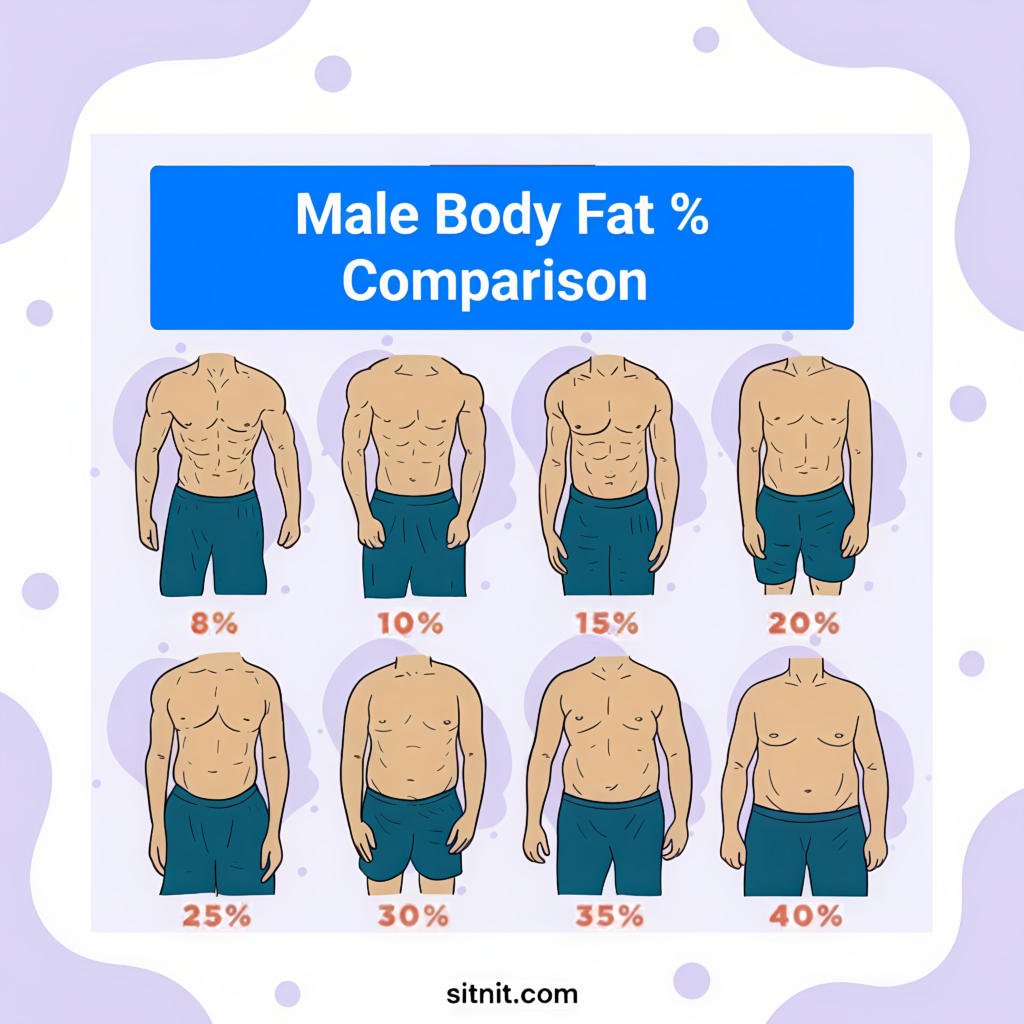
Essential -2-5%
Athlete - 6-13%
Fitness- 14-17%
Average - 18-24%
High - 25%+
For Women
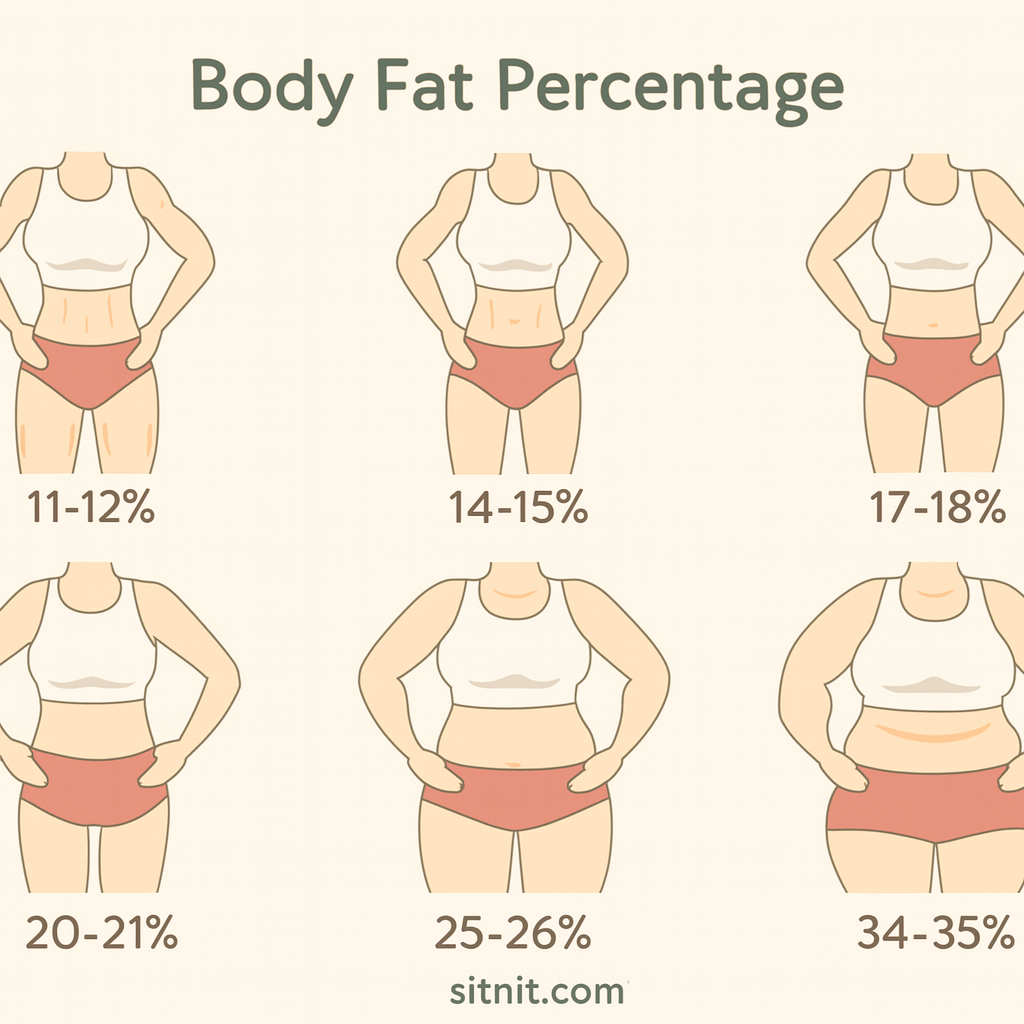
Essential -10-13%
Athlete - 14-20%
Fitness- 20-17%
Average - 21-24%
High - 25%-31%
Finding Your Number: No Fancy Lab Coat Required
You don't need a university lab to get a good estimate. Here are the most common methods, from simple to sophisticated:
The Tape Measure (Navy Method)
A simple, humble tape measure can be surprisingly insightful. By measuring specific points (like your waist and neck), you can use a proven formula to get a solid estimate.
Pros
- Inexpensive
- Easy to do at home
- Good for tracking trends
Cons
- Measurement errors possible
- Less accurate for very lean or obese
Smart Scales (BIA)
These scales send a tiny, imperceptible electrical signal through your body. They're great for tracking trends over time.
Pros
- Extremely convenient
- Great for tracking trends
- Multiple metrics
Cons
- Affected by hydration
- Varying accuracy
- More expensive
The DEXA Scan
This is the gold standard. It's like getting a high-definition map of your body, showing exactly where your fat, muscle, and bone are.
Pros
- Highly accurate
- Regional fat analysis
- Bone density measurement
Cons
- Expensive
- Not easily accessible
- Uses low-dose radiation
The Takeaway: The best method is the one you can consistently use to track your progress over time. The trend is more important than any single data point.
What's a "Good" Body Fat Percentage? Let's Get Real.
This is the question everyone asks, and the answer is beautifully human: It depends. Age, gender, genetics, and your personal fitness goals all play a role.
The chart earlier gives you the general ranges. Instead of fixating on the lowest possible number, aim for the "Fitness" or "Healthy" range for your age and gender. This is where most people feel strong, energetic, and healthy.
Chasing the "Athlete" level is often unrealistic and unnecessary for long-term health and happiness for the average person.
Key Takeaways for Your Journey
- Focus on how you feel: Are you stronger? Do you have more energy? Do your clothes fit better?
- Celebrate non-scale victories: That's real progress.
- Build sustainable habits: Consistent, healthy nutrition and enjoyable movement will naturally guide your body to its healthiest composition.
- It's not about a perfect number: It's about building a better, healthier relationship with the body you have.
Your body fat percentage is a data point, not a report card on your worth. Use it as a compass, not a shackle.
A healthy body fat percentage varies significantly.For men aged 20-40, a range of 8-19% is generally good, while for men 41-60, 11-22% is considered healthy. For women aged 20-40, a range of 21-33% is typical for good health, and for women 41-60, 23-35% is the healthy range. Remember, these are guidelines, and your personal optimal range depends on your individual health and fitness goals.
How Can I Measure My Body Fat Percentage At Home Without Special Equipments?
The most accessible method is the U.S. Navy Tape Measure Method. All you need is a soft measuring tape. For men, you'll measure your neck and waist. For women, it's the neck, waist, and hips. You then plug these measurements, along with your height, into a reliable online Navy Method calculator. It's not as precise as a DEXA scan, but it's excellent for tracking changes over time consistently.Detailed Body Fat Percentage Chart by Age
Body fat percentage standards vary by age. Here's a more detailed breakdown based on WHO and health organization guidelines:
| Age Group | Men (Healthy Range) | Women (Healthy Range) |
|---|---|---|
| 20-29 years | 8-20% | 21-33% |
| 30-39 years | 11-22% | 22-34% |
| 40-49 years | 13-25% | 24-36% |
| 50-59 years | 15-27% | 27-38% |
| 60+ years | 16-28% | 28-40% |
What These Ranges Mean for Your Health
Essential Fat
The minimum amount of fat necessary for basic physical and physiological health. Dropping below this can cause serious health issues.
Athletes
Typical for many male and female athletes. This range may not be sustainable long-term for non-athletes.
Fitness
Ideal for people who are physically fit and exercise regularly. This range is associated with good health.
Average
Typical for average, healthy individuals. While not ideal, this range is considered acceptable.
Overweight
Associated with increased health risks. Consider lifestyle changes to reduce body fat percentage.
Key Health Insights
- Body fat distribution matters: Excess abdominal fat carries higher health risks than fat stored elsewhere.
- Age affects ranges: Healthy body fat percentage naturally increases with age.
- Focus on health, not just numbers: The "fitness" range is ideal for most people seeking optimal health.
- Women need more essential fat: Biological differences mean women require higher body fat percentages for hormonal and reproductive health.
This information is for educational purposes only. Consult with a healthcare professional for personalized health advice.
Frequently Asked Questions
what is a Healthy Body Percentage For My Age And Gender?
A healthy body fat percentage varies significantly.For men aged 20-40, a range of 8-19% is generally good, while for men 41-60, 11-22% is considered healthy. For women aged 20-40, a range of 21-33% is typical for good health, and for women 41-60, 23-35% is the healthy range. Remember, these are guidelines, and your personal optimal range depends on your individual health and fitness goals.
How Can I Measure My Body Fat Percentage At Home Without Special Equipments?
The most accessible method is the U.S. Navy Tape Measure Method. All you need is a soft measuring tape. For men, you'll measure your neck and waist. For women, it's the neck, waist, and hips. You then plug these measurements, along with your height, into a reliable online Navy Method calculator. It's not as precise as a DEXA scan, but it's excellent for tracking changes over time consistently.