
Women’s Period Calculator
Track your menstrual cycle, predict ovulation, and plan ahead
Understanding Your Cycle
Average Cycle
28 days
Ovulation Day
Day 14
Fertile Window
Days 10-17
Luteal Phase
14 days
Your Cycle Predictions
Next Period Start
Ovulation Day
Fertile Window
Cycle Day Today
Cycle Calendar
Menstrual Cycle Phases
Menstrual Phase
Days 1-5: Shedding of uterine lining. Period lasts 3-7 days for most women.
Fertile Window
Days 10-17: Best chance for pregnancy. Ovulation occurs around day 14.
Luteal Phase
Days 15-28: Uterine lining thickens. PMS symptoms may occur before next period.
How to Use the Period Calculator: Your Simple Guide
Getting to know your cycle has never been easier. Start by entering the first day of your last period—the key to all predictions. Next, select your average cycle length (most common is 28 days) and your typical period duration. Click 'Calculate' to unlock your personalized cycle forecast.
Instantly, you’ll see your next period date, ovulation day, and fertile window, plus a helpful visual calendar. Use these insights to plan events, understand your mood and energy shifts, and track symptoms. It’s your private, empowering Period Calculator tool to navigate your month with confidence and clarity.
Your Menstrual Cycle: A Monthly Guide to Understanding Your Body By Period Calculator
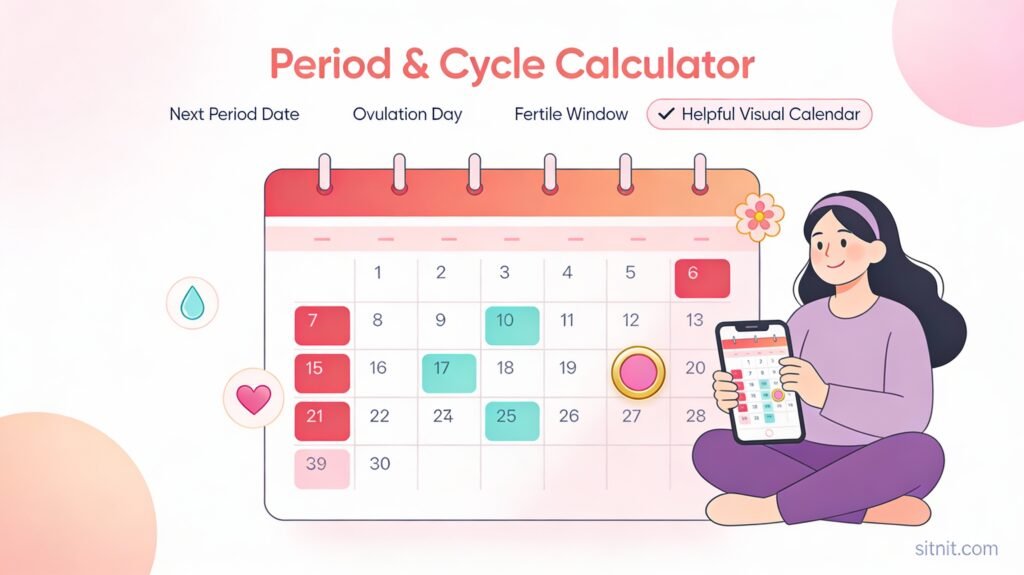
Let's be honest: our periods can feel like a monthly mystery. One month it's a breeze, the next it's a storm of cramps, cravings, and fatigue. But what if you could understand the rhythms of your cycle, not just endure them? Knowledge is power, and tuning into your menstruation cycle is the first step toward feeling more in control.
Your menstrual cycle is a beautifully complex symphony of hormones, typically lasting between 28 to 35 days. It's divided into key phases: your period (menstruation), the follicular phase, ovulation, and the luteal phase. Each phase brings subtle shifts in energy, mood, and physical sensation. By tracking these, you can anticipate your body's needs instead of being surprised by them.
Common menstruation symptoms are your body's way of communicating. From the bloating and breast tenderness caused by hormonal shifts to the fatigue that can accompany iron loss, these signs are normal for many. Premenstrual syndrome (PMS) may also bring mood swings, irritability, or food cravings in the days leading up to your period.
However, some menstruation problems are a signal to consult a healthcare provider. Severely painful cramps (dysmenorrhea), excessively heavy bleeding, or cycles that are wildly irregular shouldn't be dismissed as "just part of it." Conditions like PCOS, endometriosis, or fibroids can underlie these issues, and addressing them is crucial for your long-term health and comfort.
The goal isn't to eliminate your cycle, but to work with it. Notice when you have peak energy (often after your period) and plan big projects then. Recognize when you need more rest (often pre-menstrually) and grant yourself grace. Your cycle is a vital sign, a monthly report on your well-being. Paying attention is the ultimate act of self-care
Understanding your cycle is like having a personal blueprint for your month. You can plan with your body, not against it. Schedule important meetings during your high-energy follicular phase, and save quiet, creative tasks for your introspective luteal phase. Listen to your cravings—they often signal real needs, like magnesium in chocolate or iron in red meat. Most importantly, tracking your symptoms empowers you to identify patterns and have more productive conversations with your doctor. Your cycle is a source of innate wisdom, not just a calendar event.
FAQs ( Period Calculator)
Q: How long is a normal menstrual cycle?
A:Typically 21 to 35 days, counting from the first day of one period to the first day of the next. Regularity within your own pattern matters most.
Q: Is it normal for period symptoms to change?
A:Yes. Fluctuations in mood, cramps, and flow are common and can be influenced by stress, diet, age, and lifestyle.
Q: Can you get pregnant on your period?
A:It's possible, though less likely. Sperm can live inside the body for up to 5 days, so if you ovulate soon after bleeding ends, pregnancy can occur.
Q: What helps with period cramps and bloating?
A:Proven relief comes from heat (heating pad), light exercise, hydration, and anti-inflammatory medication (like ibuprofen). Reducing salt can ease bloating.
Q: What period symptoms are a red flag to see a doctor?
A:Soaking a pad/tampon in under an hour, bleeding longer than 7 days, severe pain unrelieved by medication, or sudden major changes in your cycle warrant a visit.
Women’s Health & Pregnancy
Pregnancy Weight Gain Calculator