
Brown Egg vs White Egg
Brown Egg vs White Egg: Which Is Healthier, Safer, and Better?
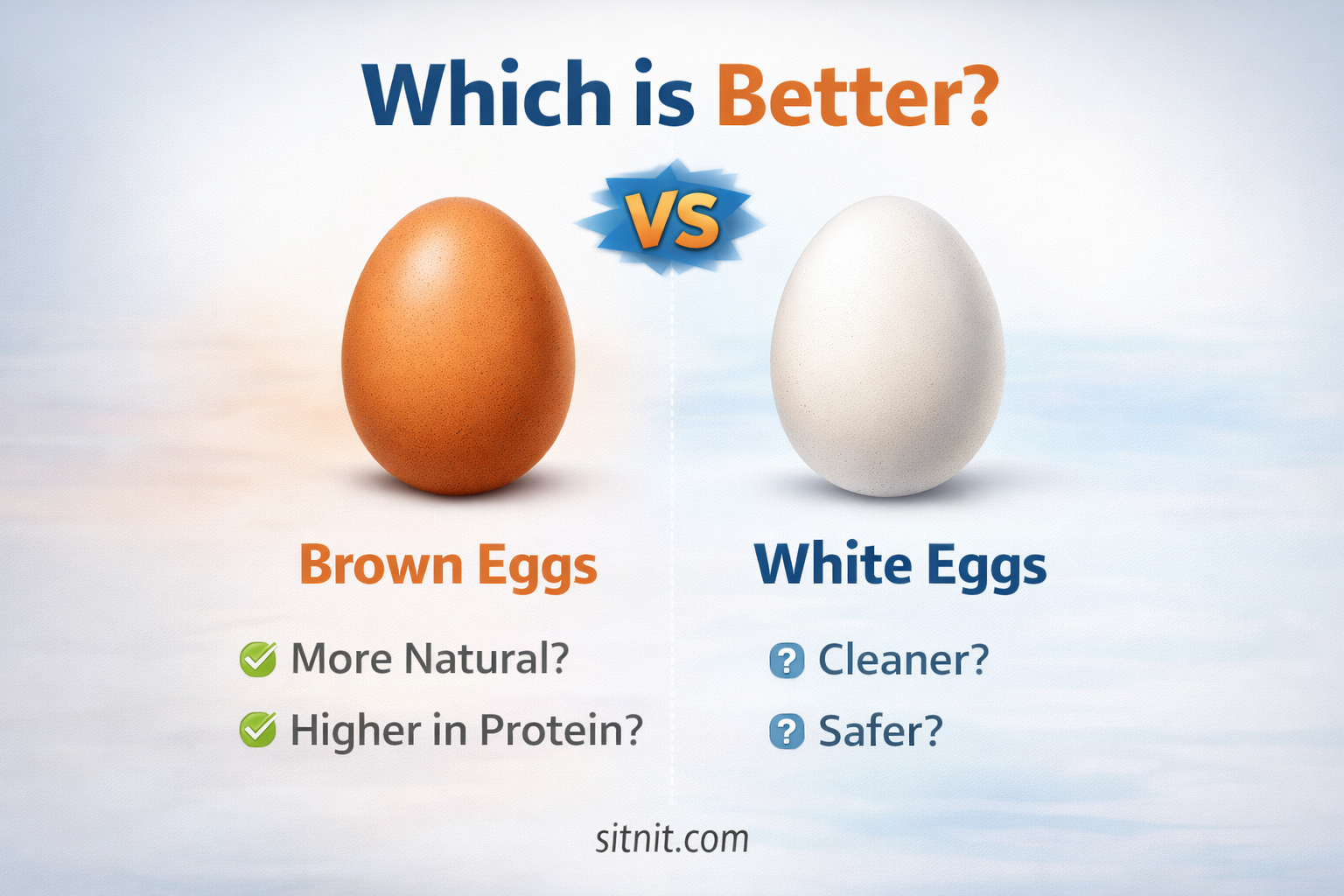
If you’ve ever stood in front of the egg shelf wondering whether to buy brown eggs or white eggs, you’re not alone. Many people believe brown eggs are healthier, more natural, or higher in protein, while others think white eggs are cleaner or safer. The price difference often adds to the confusion.
So what’s the real truth? Let’s break it down clearly, based on science, nutrition facts, and practical buying tips.
What Causes the Difference in Egg Color?
The color of an egg depends entirely on the breed of the hen, not on nutrition or quality.
White eggs are laid by hens with white feathers and white earlobes, such as White Leghorns.Brown eggs are laid by hens with red or brown feathers and red earlobes, such as Rhode Island Reds.
The brown color comes from a natural pigment called protoporphyrin, added during the final stage of shell formation. Inside the shell, both eggs are the same.
Eggshell color is genetic, not a health indicator.
Are Brown Eggs Healthier Than White Eggs?
No. Brown eggs are not healthier than white eggs.
Nutritionally, both brown and white eggs contain high-quality protein, healthy fats, vitamins A, D, E, and B12, and minerals like selenium and phosphorus. Scientific studies consistently show no meaningful nutritional difference between brown and white eggs.
What actually affects nutrition is the hen’s diet, access to sunlight, and living conditions such as free-range or caged systems. For example, eggs from hens fed omega-3-rich feed will contain more omega-3s, regardless of shell color.
Brown Egg vs White Egg: Protein and Nutrition Value
Many people believe brown eggs contain more protein, but this is a myth.
Both brown and white eggs have almost the same protein content, similar calorie levels, and comparable cholesterol amounts. If protein intake is your priority, egg size matters more than shell color.
Check — Protein Calculator, Carbohydrate Calculator, Calories Calculator
Do Brown Eggs Taste Better Than White Eggs?
Eggshell color does not affect taste.
The taste of eggs depends on freshness, the hen’s feed, storage conditions, and cooking method. Fresh, locally sourced eggs often taste better simply because they are newer, not because they are brown. In blind taste tests, most people cannot tell the difference between brown and white eggs.
Why Are Brown Eggs More Expensive?
Brown eggs are usually more expensive, but not because they are healthier or better.
Hens that lay brown eggs are generally larger and require more feed, and they often produce fewer eggs compared to white-egg-laying breeds. Many organic and free-range eggs are also brown, which further increases the price.The
higher cost reflects farming practices, not shell color.
Which Is Safer: Brown Eggs or White Eggs?
Both brown and white eggs are equally safe when handled properly.
Egg safety depends on clean shells, proper refrigeration, and thorough cooking. White eggs are not bleached, which is a common misconception. All eggs are naturally the color they appear.
What Should You Look for Instead of Egg Color?
If you want healthier eggs, focus on quality indicators rather than shell color. Look for labels such as free-range or pasture-raised, omega-3 enriched eggs, clear freshness dates, and trusted local or certified farms.Shell
color should not influence your buying decision.
Conclusion
There is no health, nutrition, protein, or taste advantage based on egg color. Brown eggs are not more natural or safer, and white eggs are not inferior or processed.
Choose eggs based on freshness, quality, and farming practices, not shell color. A well-raised hen matters far more than whether the egg is brown or white.
Check – All Calculators/ Tools