
Beauty · Personal Care · Skin
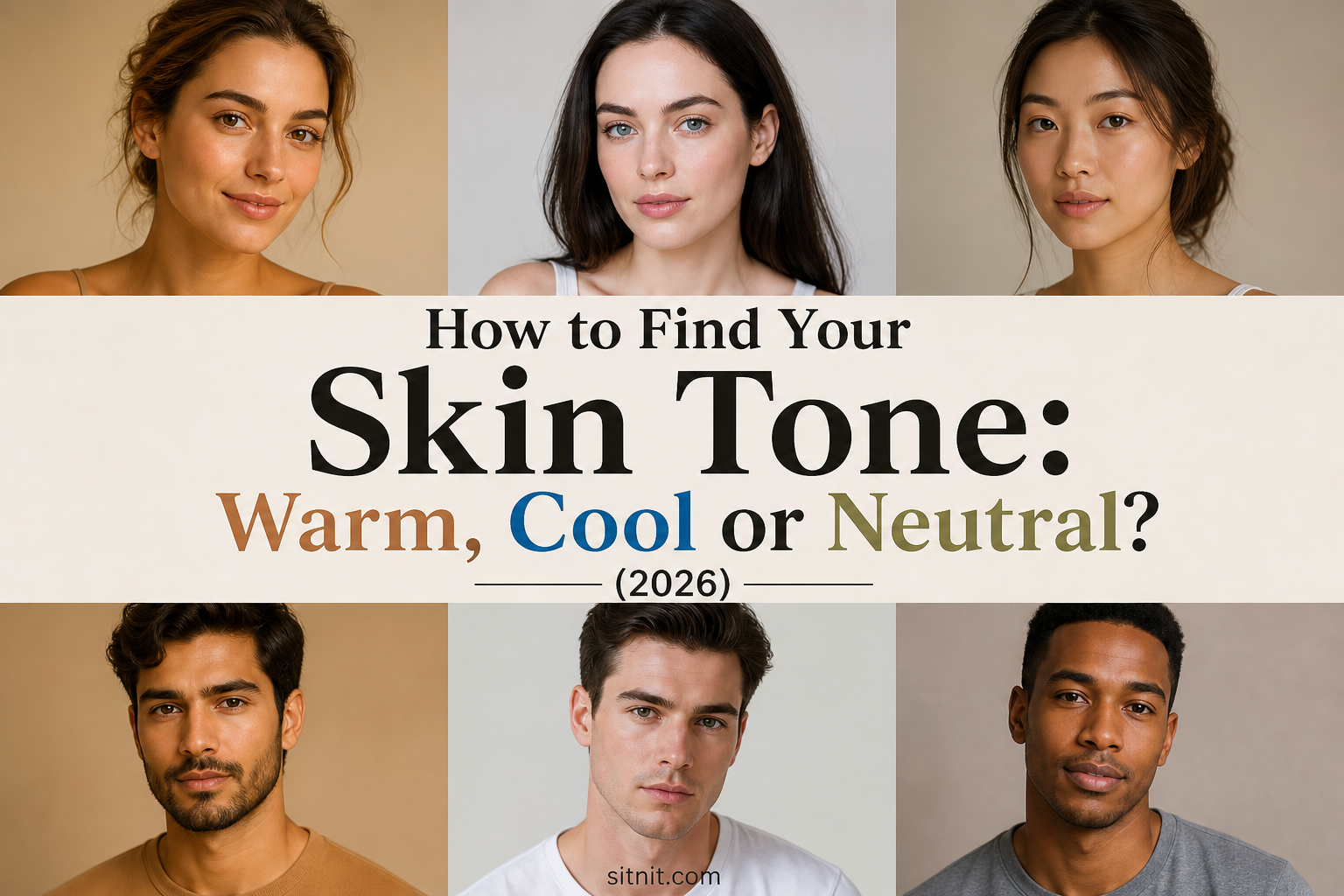
How to Find Your Skin Tone:
Warm, Cool or Neutral? (2026)
Foundation shade is not the problem. Undertone is. Two people with the exact same skin depth can need two completely different bottles — one warm, one cool — and no amount of “matching to your wrist” fixes that if you’ve never actually confirmed your undertone.
Most guides give you the vein test and call it done. Then your veins say one thing and your jewellery says another, and the article just… stops. That contradiction is the actual problem people search for. This guide answers it directly, including the specific edge case almost nobody covers: what it means when your veins show both blue and green.
Here’s what’s ahead: four tests ranked by reliability, a full walkthrough of what to do when they contradict each other, and a section built entirely around the mixed-vein edge case — because that’s a top real search query on skin tone, and it’s the one thing every competing article skips.
What Are the 3 Skin Undertones?
Your skin runs on two colour systems at once. Surface tone is what you’d call your shade — fair, medium, tan, deep. It shifts with sun, age, and season. Undertone sits underneath. It’s fixed. Tan for a month and it doesn’t move.
Three categories cover it. Get this one thing right and every other beauty decision downstream gets easier.
Golden, peachy, or yellow hues beneath the skin. Common across African, Asian, Latin, and Mediterranean descent — but shows up in every ethnicity.
- Veins read green or olive
- Gold jewellery reads better
- Tans easily, rarely burns
- Stark white can look harsh
Pink, red, or bluish hues beneath the skin. Turns up across Northern European and East Asian ancestry regardless of how deep the surface shade runs.
- Veins read blue or purple
- Silver jewellery reads better
- Burns before it tans
- Warm orange tones clash
A genuine split between warm and cool. Rarer than people assume — and the most forgiving undertone for foundation shopping.
- Veins read blue-green
- Both metals work equally
- Reads balanced, not flat
- Soft muted tones suit best
Olive skin is not a fourth undertone. It’s a surface quality — a grey-green cast that can sit on top of a warm-neutral or cool-neutral base. If that’s you, skip the visual tests. They weren’t built for olive skin and they’ll mislead you. Go straight to the AI detector.
4 Methods to Find Your Skin Tone — Ranked by Accuracy
Every method here works. Not equally, though. Ranked from most universally reliable to most situational.
Look at the veins on your inner wrist in daylight. Blood vessel colour through skin is a direct undertone signal.
Fails in warm indoor light. Daylight only.
Hold silver against your wrist. Watch what it does to your skin. Repeat with gold.
Use plain metal — no plating, no stones.
Hold plain white paper next to your bare, undressed face in daylight. Watch how your skin reads against pure white.
Weaker signal on very deep skin tones.
Sitnit’s free detector reads your actual skin from a photo — including olive and mixed cases visual tests can’t resolve.
Free. No login. The tiebreaker.
⚠️ What If Your Tests Contradict Each Other?
More common than most beauty articles let on. Veins say warm, jewellery says cool? You’re almost certainly neutral. The more your tests disagree, the more neutral you are — that’s not a broken test, that’s the answer. Confirm at sitnit.com/skin-tone-detector for a result the mirror can’t argue with.
When Your Veins Show Both Blue and Green
This is the question people actually type in — and almost nothing online answers it directly: what does it mean if I check my wrist and see blue veins in one spot, green in another?
Short answer: that’s not a failed test. It’s a neutral signal. Skin thickness varies slightly across your wrist, and vein colour shifts with it — so checking one single spot and locking in an answer is where most self-diagnoses go wrong.
Do blue veins always mean cool?
Almost always — but not in every case. Vein colour depends on skin thickness and blood oxygen level too, not undertone pigment alone. Very fair or very deep skin can throw a blue-looking vein even on a slightly warm undertone. If your blue-vein result doesn’t match your jewellery test, don’t force an answer. Two agreeing methods beat one confident one.
If my veins look green, is my skin definitely warm?
Usually, yes. Green or olive veins are the standard warm marker. The exception sits at the deep end of the skin tone range — less light reflects through deeper skin, so veins can look muted or green-grey no matter what the actual undertone is. On deep skin, weight the jewellery and white paper tests above the vein test.
Step-by-Step: How to Find Your Skin Tone Right Now
Under three minutes, start to finish.
Skip the Guesswork — Use the Free AI Detector
Upload a photo. Get your undertone in 60 seconds. Warm, cool, neutral, or olive — with personalised makeup and colour tips attached.
Find My Skin Tone Free →What to Do With Your Skin Tone: Makeup, Clothing & Hair
Knowing your undertone is only worth something once you use it. Here’s the direct translation for the three decisions that matter most.
| Category | Warm Undertone | Cool Undertone | Neutral Undertone |
|---|---|---|---|
| Foundation | W, warm, golden, yellow-based, peach | C, cool, pink-based, rose | N, neutral — test both at the jawline |
| Clothing | Terracotta, mustard, olive, coral, warm brown, cream | Emerald, navy, burgundy, hot pink, cool grey, lavender | Soft white, teal, dusty rose, slate — most colours work |
| Jewellery | Gold, rose gold, copper, bronze | Silver, white gold, platinum | All metals — layer gold and silver together |
| Hair colour | Golden blonde, copper red, caramel, warm brunette | Ash blonde, platinum, cool brunette, violet, blue-black | Most shades — avoid extreme warm and extreme ash at once |
| Blush | Peach, coral, warm pink, terracotta | Cool pink, berry, mauve, rose | Nude pink, soft rose, dusty pink |
| Lip colour | Warm nude, coral, orange-red, warm brown-nude | Cool nude, berry, blue-red, mauve, deep plum | Most nudes and pinks — test both warm-nude and cool-nude |
The Foundation Test That Always Works
Test on your jawline. Never the wrist. In natural light, the right shade vanishes. Pink cast means too cool. Orange or yellow means too warm. Grey or ashy means the undertone match itself is wrong, not just the depth.
Who Needs This Guide Most?
Foundation Keeps Looking Wrong
Six foundations, six failures — orange, ashy, or pink within an hour of wearing them. That’s an undertone problem, not a shade problem. Confirming warm vs cool narrows your next purchase to the right family immediately.
Certain Colours Always Look Dull
That top that looked great in the shop and dull on you every time since — wrong undertone family. Colour from the opposite undertone fights your skin instead of complementing it.
Considering a Hair Colour Change
Blonde, red, or brunette lands right far more often once you know your undertone first. Platinum on warm skin reads jarring. Heavy copper on cool skin reads similarly off. Undertone narrows your safe range before you sit in the chair.
Rebuilding Your Whole Style
Reassessing makeup, wardrobe, or personal style for 2026? Undertone is the starting point everything else builds from — get it wrong and every other colour decision inherits the mistake.
5 Mistakes That Wreck Your Skin Tone Result
Mistake 1: Testing Under Yellow Indoor Light
Warm bulbs push veins greener and cool skin warmer. Test in daylight. Nothing else on this list matters if you skip this — it’s the single biggest source of wrong self-diagnoses.
Mistake 2: Confusing Surface Shade With Undertone
Two people with identical medium skin — one warm, one cool — need entirely different foundation. Depth alone never tells you the hue direction. You need both numbers, not one.
Mistake 3: Assuming a Tan Means Warm Undertone
Cool-undertoned people tan too. Fair people carry warm undertones. Sun changes surface tone. It never touches undertone. A deeply tanned cool-undertoned person still wears silver better than gold.
Mistake 4: Giving Up When Tests Conflict
A conflicting result is data, not a dead end — it usually means neutral. Run the AI detector rather than picking whichever test result you liked better.
Mistake 5: Testing Foundation on Your Wrist
Wrist skin is thinner and often a different shade than your face entirely. Test on your jawline. A shade that works on your wrist can still be visibly wrong on your face.
Expert Pro Tips for Using Your Skin Tone
Frequently Asked Questions — Skin Tone
Three Things to Take Away and Use Today
Finding your skin tone costs five minutes. It pays that back every single time you buy foundation, pick an outfit, or think about a hair colour change — it removes a decision that’s felt like guesswork for years.
First: run the vein and jewellery tests right now, in daylight. Write the result down. Two tests agreeing is your answer. Tests conflicting, or a mixed blue-green vein reading, points to neutral — confirm with the AI detector.
Second: apply it to one purchase this week. Foundation, blush, a clothing item — anything. Notice how much faster the decision gets once you’ve cut the wrong undertone family out entirely.
Third: knowing how to find your skin tone is one piece of a full style profile. Eye shape and hairstyle are the other two. Put all three together and every colour decision you make in 2026 gets sharper.
Find Your Exact Skin Tone — Free, Instant, No Login
Sitnit’s free AI skin tone detector settles warm, cool, neutral, or olive in under 60 seconds — with personalised makeup, clothing, and hair colour tips attached.
Use the Free AI Detector →More Free AI Personal Care Tools
Undertone is one piece of the picture. These are the other tools on Sitnit that build out the rest of your profile — all free, all no-signup.
Face Shape Detector
Identify your face shape to guide hairstyle, glasses, and contouring choices.
AI Hairstyle Recommender
Get cuts and colours matched to your face shape and undertone together.
AI Glasses Finder
Find frame shapes that suit your face — matched by proportion, not guesswork.
AI Skincare Routine Generator
A personalised morning and night routine based on your skin type and concerns.
AI Personal Care Hub
The full collection — face, hair, eyes, skin, and style tools in one place.
Shivam, Software Engineer
Shivam is the founder of Sitnit.com and personally built the AI skin tone detector used in this guide. Every test and claim here is checked against dermatology and colour-theory sources before publishing — including the mixed-vein edge case above, added because it kept showing up as a real, unanswered search on this site.