What Hairstyle
Suits Me?
You saved the reference photo. Showed the stylist. Waited. And it still didn’t look quite right on you. Here’s why — and the four-factor method that fixes it for good.
The hairstyle that suits you depends on four factors: your face shape, hair type, lifestyle, and personal style. Together, these determine which cuts flatter your features and actually work with your hair. The fastest way to get a personalised answer in 2026 is to use a free AI hairstyle quiz — it analyses all four factors and gives you specific cut names to ask for.
Why Most People Never Find Their Perfect Hairstyle
How do you know what hairstyle suits you? Most people never actually answer that question. They find something that works “fine” with their face and stop looking. They never find the hairstyle that makes people say “you look amazing, what did you do?”
The reason is almost always the same. They chose based on one factor alone — usually face shape, or what they saw on someone else — without accounting for the other three factors that make a hairstyle actually work for them personally. A cut that’s perfect for someone with straight, fine hair looks completely different on thick, wavy hair. A high-maintenance style that looks incredible on a model is impractical for someone who travels for work six days a week.
Getting the right answer to “what hairstyle suits me?” requires all four factors working together. This guide covers all of them — and points you to the AI quiz that handles the calculation for you in under 60 seconds.
Generic hairstyle articles rank haircuts by face shape only. That accounts for roughly 25% of what makes a hairstyle actually work. The other 75% — hair type, lifestyle, and personal style — is almost always ignored. That gap is why so many people leave a salon chair feeling vaguely disappointed.
The 4 Factors That Determine Your Ideal Hairstyle
Before you take any quiz or walk into any salon, understand what the four factors are and why each one matters.
Face Shape
The structural foundation. Determines which cuts create visual balance — adding length, width, softness, or height to move your proportions toward oval.
Hair Type & Texture
Fine, thick, straight, wavy, curly, coily. Your natural texture changes how every cut behaves. A blunt bob falls flat on thin hair, dramatically on thick. Same cut, completely different result.
Lifestyle & Maintenance
How much time do you spend styling daily? Do you travel, swim, or work in high heat? A hairstyle that requires 30 minutes every morning is a liability, not an asset, for many people.
Personal Style
Classic, edgy, natural, professional, creative. Your hairstyle is part of your personal brand. A shag cut can look incredible but clash entirely with a corporate environment.
How the Factors Interact — Quick Reference
| Factor | Low Importance | High Importance | Impact If Ignored |
|---|---|---|---|
| Face Shape | — | Always critical | Cut fights your features instead of flattering them |
| Hair Type | Fine + straight (most forgiving) | Thick, curly, coily | Cut looks nothing like the reference photo |
| Lifestyle | Work from home, flexible routine | Busy, travel, athletic | Abandon the style within 3 weeks |
| Personal Style | Neutral, classic aesthetic | Edgy, creative, formal | Hairstyle clashes with wardrobe and context |
Factor 1 — Face Shape (The Foundation)
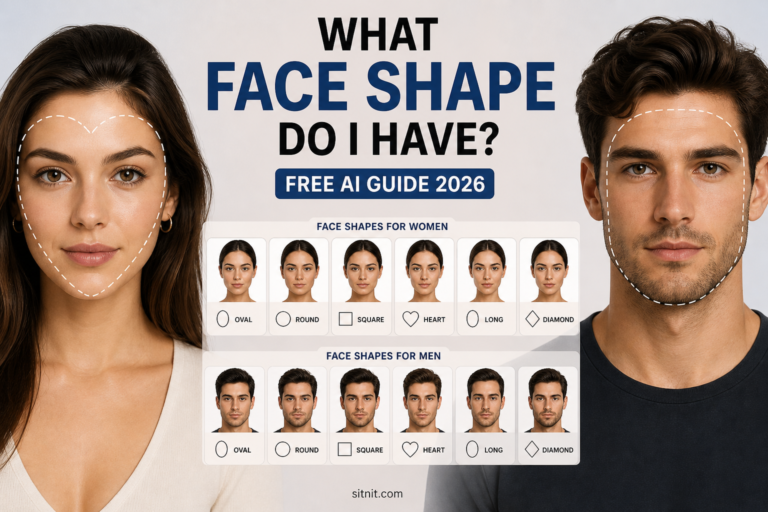
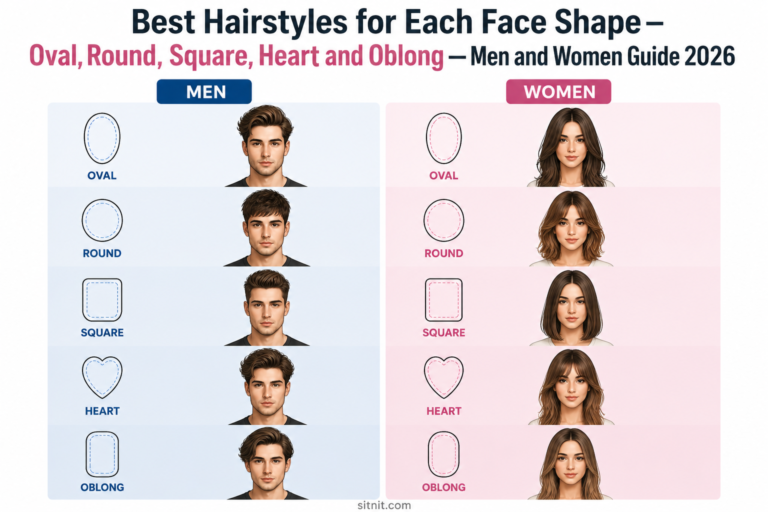
Face shape is the first filter because it’s the most structurally decisive. Every great haircut creates visual balance by working with your face’s natural proportions. There are six main face shapes to know: oval, round, square, heart, oblong, and diamond.
The goal of every great haircut is the same regardless of your shape: move your visual proportions toward a balanced, oval-ish appearance. That means adding height for round faces, softening angles for square faces, adding width at the jaw for heart and diamond faces, and adding side volume for oblong faces.
We wrote a complete guide covering every face shape with specific named cuts for men and women. Read Best Hairstyles for Your Face Shape — Men & Women 2026 for the full breakdown before or after taking the quiz.
If you’re not sure of your face shape, the AI Face Shape Detector identifies it in under 60 seconds — no tape measure, no guesswork. The hairstyle quiz uses this as its first input.
Factor 2 — Hair Type & Texture
This is the factor most articles completely skip — and it’s why so many people show their stylist a reference photo and still leave disappointed. The person in that photo likely has different hair than you. Same cut, completely different behaviour.
According to the American Academy of Dermatology, hair texture and density are primary factors in how haircuts fall and behave. Understanding your type prevents mismatched expectations before you sit in the chair.
American Academy of Dermatology — authoritative hair health guidanceThe Main Hair Types and What They Mean for Your Cut
| Hair Type | Characteristics | What Works | What to Avoid |
|---|---|---|---|
| Fine & Straight | Lies flat easily, shows split ends, loses volume quickly | Blunt cuts (add illusion of thickness), bobs, lobs | Long layers (removes what little volume exists) |
| Thick & Straight | Heavy, holds shape well, can look bulky at the sides | Long layers (removes weight), textured cuts, thinning | One-length blunt cuts (creates a “helmet” effect) |
| Wavy (2A–2C) | S-pattern, frizz-prone, shrinks when wet | Long layers, DevaCut, diffused styles | Very short cuts (lose wave pattern and shape) |
| Curly (3A–3C) | Strong spiral, significant shrinkage, needs moisture | Curly-specialist cuts, volume-friendly shapes | Straight-hair reference photos (they won’t translate) |
| Coily (4A–4C) | Tight coils, maximum shrinkage, very dense | TWA, locs, protective styles, afro-textured cuts | Expecting length measurement to predict final length |
For a more detailed classification of hair texture types, Wikipedia’s hair texture page provides a useful scientific overview of the Andre Walker typing system used widely in professional hairstyling.
Wikipedia — hair texture classification referenceAlways tell your stylist your natural texture — before any heat or product — not how your hair looks when you walk in. Many people arrive with blown-out or product-styled hair that looks completely different to their actual base texture. The cut should be designed for your natural hair, not your styled hair.
Factor 3 — Lifestyle & Maintenance Level
The most beautiful haircut in the world is useless if you can’t maintain it. Lifestyle compatibility is what separates a haircut that works on day one from one that works every day for months.
Ask yourself honestly: how many minutes are you realistically willing to spend on your hair every morning? Not on the best morning — on the average Tuesday. That number should drive your cut decision as much as anything else.
| Lifestyle Type | Time to Style | Best Hairstyle Approach | Avoid |
|---|---|---|---|
| 🏃 Active / Athletic | <5 min | Wash-and-go lengths, pixie, short textured cuts, buns | Precision blowouts, fragile styles |
| 💼 Corporate Professional | 10–20 min | Classic lob, layered medium length, structured cuts | Very bold colours, extreme asymmetry |
| ✈️ Frequent Traveller | <10 min | Air-dry friendly styles, low-maintenance medium lengths | Any cut that needs salon tools daily |
| 🎨 Creative / Flexible | 20–40 min | Shag, bixie, bold fringe, expressive colour | Nothing — enjoy the freedom |
| 👶 Parent / Caregiver | <5 min | Short cuts, wash-and-go, practical ponytail-friendly lengths | Anything requiring daily heat styling |
Most people overestimate their maintenance commitment at the salon and underperform at home. If you’re on the fence between a low-maintenance and high-maintenance cut, always choose lower. A low-maintenance style that looks good every day beats a high-maintenance style that only looks right on weekends.
Factor 4 — Personal Style & Aesthetic
This is the most personal factor — and the most often dismissed. Your hairstyle is visible every day to everyone you meet. It should feel like you, not like the most technically flattering option that ignores everything about your personality.
There are five broad aesthetic directions most people fall into. Find yours and use it to filter your hairstyle options:
| Style Aesthetic | Feel | Hairstyle Direction | Examples |
|---|---|---|---|
| Classic / Timeless | Polished, refined, professional | Structured cuts, clean lines, neutral tones | Blunt bob, taper fade, long layers |
| Natural / Effortless | Relaxed, organic, lived-in | Textured cuts, air-dry styles, soft movement | Shag, bro flow, curtain bangs |
| Bold / Edgy | Expressive, fashion-forward, distinctive | Asymmetry, undercuts, strong colour, dramatic fringes | Bixie, wolf cut, disconnected undercut |
| Romantic / Feminine | Soft, flowing, delicate | Waves, long layers, face-framing, braids | Beachy waves, face-framing lob, halo braid |
| Minimal / Clean | Sharp, intentional, architectural | Geometric cuts, precise lines, monochromatic tones | Blunt cut, French crop, buzz with shape-up |
Don’t pick the most flattering option for your face shape if it conflicts with your aesthetic. A geometric blunt bob might be technically perfect for an oval face, but completely wrong for someone whose style is natural and effortless. The best hairstyle for you sits at the intersection of all four factors.
Ready to Find What Hairstyle Suits You?
The free AI quiz covers all 4 factors — face shape, hair type, lifestyle and style — then gives you specific cut names in 60 seconds.
How to Use the AI Hairstyle Quiz — Step by Step
The Sitnit AI Hairstyle Recommender is a free quiz that covers all four factors and outputs personalised recommendations — specific cut names you can actually bring to a stylist. Here’s exactly what happens when you take it.
Answer questions about your face shape
The quiz first asks about your face shape. If you know it — great. If not, it guides you through identifying it using a short visual comparison. Alternatively, use the Face Shape Detector first and bring your result.
Describe your hair type and texture
Fine or thick? Straight, wavy, curly, or coily? The quiz asks these in plain language — no hairdresser jargon. This is what makes the recommendations actually match your real hair, not just your face shape.
Set your lifestyle and maintenance preference
Choose how much daily styling time you genuinely want to spend. This filters out technically great options that you’d realistically abandon within a week.
Select your personal style direction
Classic, natural, bold, romantic, or minimal. This final filter ensures the recommendation aligns with your actual personality and how you want to present yourself.
Get your personalised recommendation
The quiz outputs specific named cuts — not vague descriptions. Names like “textured lob with curtain bangs” or “high fade with textured crop” that you can show directly to your stylist. Screenshot it. Bring it to your appointment.
Take the quiz before booking your appointment, not at the salon. This gives you time to look up the recommended cuts, see what they look like on similar hair types, and arrive with genuine confidence in what you’re asking for. Stylists give better results when clients come in with clarity rather than “I don’t know, something different.”
Who Gets What Result — Real Scenarios
Here’s how the four-factor method plays out for real people in real situations. Find the scenario closest to yours — including what hairstyle suits me for men, which is one of the most common versions of this question.
Round face · Thick wavy hair · Busy professional · Classic style
The quiz would recommend a long side-parted lob with loose waves — the side part slims the face, the length past the collarbone avoids widening the jaw zone, and loose waves work with natural texture without requiring daily heat. Classic enough for an office, low-maintenance enough for a packed schedule. See your version →
Square face · Fine straight hair · Athletic lifestyle · Natural aesthetic (what hairstyle suits me for men)
Recommendation: textured French crop or ivy league cut — softens the square jaw with textured fringe, looks intentionally styled but takes 2 minutes to finish with a small amount of matte paste. Works after the gym. Looks clean for casual occasions. Try the quiz →
Heart face · Curly 3B hair · Creative field · Bold aesthetic
Recommendation: defined curly lob with volume at the ends — adds width at the jaw (balancing the wide forehead), works with the curl pattern rather than fighting it, and expresses personality. A curly specialist cut is recommended. The quiz also suggests checking the Skin Tone Detector to pick a colour that complements the finished cut.
Oval face · Medium thick hair · Parent / low time · Minimal style
The lucky oval face with maximum options. Recommendation: wash-and-go pixie or short textured cut — takes 2 minutes, always looks intentional, suits an oval face at any length, and works with medium thickness. The quiz also notes the Beard Recommender as a next step for the complete look.
Common Mistakes When Choosing a Hairstyle
Most people make the same small number of mistakes. Recognising yours is the fastest route to stopping it.
Choosing based on the photo, not the factors
The person in the reference photo has different hair density, different texture, different face proportions. What suits them may not suit you. Use the four factors — not the aesthetic of someone else — to decide what you want.
Ignoring maintenance reality
You’ll spend 3 months loving the idea of your new high-maintenance cut, then abandon it and grow it out. Be honest about your actual morning routine before you commit. If you currently spend 5 minutes on your hair, a style that requires 25 will fail within weeks.
Not accounting for hair type when choosing length
Fine hair at chin length looks completely different to thick hair at chin length. Curly hair at shoulder length after shrinkage may sit at jaw level. Always factor in your texture when choosing cut length — ask your stylist to show you where a length will sit on your specific hair when dry.
Saying “whatever you think” to your stylist
Stylists are skilled at cutting, not at reading minds. Saying “whatever you think” gives them nothing to work with and removes your input from a decision that directly affects you. Come with a clear direction — ideally your quiz result — and give them that as a starting point.
Treating hairstyle as a one-time decision
Your face shape changes with age and weight. Your lifestyle changes. Your style preferences evolve. The hairstyle that was perfect at 25 may not be optimal at 38. Reassess the four factors every two to three years — or after any significant lifestyle change.
Expert Pro Tips — What Hairstyle Suits Me
Run the quiz after any significant weight change
Weight gain or loss of 15+ pounds changes your face shape meaningfully. Round faces can shift toward oval. Square faces can soften at the jaw. If your body has changed, your optimal hairstyle may have changed too. Re-run the AI quiz and compare to your previous result — don’t assume last year’s recommendation still applies.
Match your glasses to your hairstyle, not the other way around
Your frames are on your face every day. They interact with both your face shape and your hairstyle. A heavy rectangular frame on a round face already adds structure — it reduces what your haircut needs to do. Use the AI Glasses Finder in combination with your hairstyle quiz for a complete picture. The two tools together give you a look, not just a cut.
Your skin tone affects which hair colours flatter your cut
The right cut on the wrong colour can still look off. Warm skin tones look best with golden, caramel, and warm brown shades. Cool skin tones suit ash, platinum, and blue-black tones. Use the Skin Tone Detector before your next colour appointment — knowing your undertone helps you pick a shade that makes the whole look land correctly.
Ask for a dry cut consultation before committing to anything major
Before a dramatic length or style change, ask your stylist for a dry consultation — 10 minutes where they look at your hair dry, assess how it falls naturally, and give an opinion on how the intended cut will behave with your specific hair. Not every salon offers this, but most senior stylists will do it when asked. It prevents catastrophic mismatches, especially for curly or wavy hair.
Complement your hairstyle with your beard if applicable
For men, the hairstyle and beard work as a single visual unit. A disconnected undercut looks very different with a full beard versus clean shaven. Before your next haircut, check the AI Beard Style Recommender to see if your planned cut and beard style are designed to work together or against each other.
Frequently Asked Questions
The exact questions people ask Google — answered directly.
Final Verdict
“What hairstyle suits me?” has a specific, personal answer — not a generic list.
The answer lives at the intersection of your face shape, hair type, lifestyle, and personal style. That’s why generic articles with ranked hairstyle lists consistently fail to help people find their perfect cut — they’re giving you 25% of the answer and calling it complete.
Take action on exactly one thing today: Go to the free AI Hairstyle Quiz, spend 60 seconds answering four sets of questions, and get a specific recommendation you can act on at your next appointment. If you want the single best way to double-check the result, read the face shape guide to confirm why that particular cut works for your features.
The right hairstyle doesn’t just look good in the salon. It works every morning, matches your life, and feels unmistakably like you.
Find What Hairstyle Suits You — Free, in 60 Seconds
AI-powered quiz. All 4 factors. Specific cut names to bring to your stylist. No sign-up. Works for men and women.